




Rental Property Electrical Safety: An Owner Guide
A rental property electrical safety plan connects resident reports, qualified assessment, clear repair authorization, and documented follow-up. Keep property-specific records, use appropriate professionals for technical decisions, and verify each work outcome. Treat immediate danger as an emergency, and check applicable local requirements rather than relying on a general owner checklist.
Build a rental property electrical safety plan
A rental property electrical safety plan gives an owner a repeatable way to receive concerns, arrange qualified evaluation, authorize appropriate work, and verify completion. It connects the people who notice a problem with the people who can assess it. The useful result is a clear next action for every unresolved concern, rather than a folder full of disconnected invoices.
This guide is for U.S. rental-property owners and investors organizing that process. It is not a wiring manual, an electrical inspection, or a statement of local landlord requirements. Actual obligations depend on the property, location, work, and circumstances. Ask the appropriate local authority and qualified advisers about applicable requirements, permits, access, licensing, and inspections. Emergency conditions require emergency services and appropriate utility or professional assistance.
Consider an illustrative report: a resident says the same kitchen outlet has stopped working twice. The first repair invoice says only that service was restored. When another call arrives, the owner cannot tell which outlet was examined or what was found. A stronger process preserves the original complaint, identifies the location, records the electrician's findings, and explains what to do if the symptom returns.
You do not need to become an electrician to improve this process. You need reliable contacts, accurate records, authority to act, and disciplined follow-through. The sections below help you build those pieces without turning residents or general maintenance staff into electrical troubleshooters. Use the examples as planning tools, adapted to qualified advice and your actual property.
Start with the boundaries of the owner's role
Separate observation from diagnosis
An observation describes what someone noticed: a light flickered, a plug fit loosely, a circuit lost power, or a sound came from a particular area. A diagnosis explains a cause. Keep those categories separate in your records. A resident's description can be valuable even when the resident does not know the technical vocabulary. Rewriting a description into an assumed cause can send the next person in the wrong direction.
Use neutral wording such as, "Resident reported a buzzing sound near the hallway switch on Tuesday evening." Do not convert that into "bad switch" before an appropriate assessment. When a provider identifies a cause, add the finding as a new entry with its source. Preserve uncertainty where the evidence remains incomplete. An honest unknown is more useful than a confident guess that later becomes treated as established fact.
Photographs can help identify a location or document a visible condition when taken safely. They do not establish that concealed wiring is sound. Never ask someone to remove covers, approach exposed components, touch a suspect device, or recreate a dangerous condition to improve a photo. The management goal is to communicate enough information to route the concern appropriately, not to perform remote electrical testing.
Give qualified people technical decisions
Assign electrical assessment and work to appropriately qualified providers, with credentials and authorization suited to the actual task. Ask them to explain what they examined, what they found, and what remains uncertain. Do not direct a repair method from a photograph or an online checklist. A clear scope describes the reported problem and requested outcome while leaving technical decisions to the appropriate professional.
Keep practical limits visible. An owner may coordinate access and approve an estimate; a manager may dispatch a provider within agreed authority; a resident may report a symptom. Those roles do not automatically authorize any of them to open equipment or change wiring. Write the division of responsibility in plain language so a person handling an evening call does not improvise beyond their competence.
Recognize concerns that need prompt escalation
The Consumer Product Safety Commission's Guide to Home Wiring Hazards identifies warning signs including frequent breaker trips, unusual buzzing, overheating, burning odors, loose plugs, and electrical shocks. These are reasons to seek appropriate evaluation, not a menu of do-it-yourself experiments. A brief symptom that disappears should still remain in the property record for the professional reviewing it.
For a suspected fire, smoke, active sparking, shock incident, or other immediate danger, prioritize personal safety and emergency assistance. Leave the dangerous area and contact emergency services as appropriate. Do not delay that action to complete a maintenance form or obtain owner approval. The reporting system should make clear that ordinary service channels are not substitutes for emergency response.
For other electrical concerns, use qualified advice to decide the appropriate response and safe interim arrangements. Do not ask a resident to repeatedly reset a device, try another appliance in a suspect outlet, or reproduce an intermittent symptom. An owner can preserve the report and dispatch help without attempting to resolve the technical uncertainty over the phone.
Create a short escalation card with emergency contacts, the utility's appropriate contact route, the primary electrical provider, and a backup. Review these details before they are needed. The card should explain who receives updates if the primary contact cannot answer. A name on an old invoice is not a dependable response plan unless availability and the current contact route have been checked.
Make the property record usable before the next call
Create one stable property reference
Use the same property and unit identifier on reports, estimates, photographs, approvals, and invoices. Avoid relying on a resident's name as the only reference because occupancy changes. Include building and unit information where addresses alone are ambiguous. A provider arriving at a property with several similar entrances needs enough detail to reach the intended location without exposing another resident's private information.
Organize the record into a small number of practical groups: baseline information, professional reports, open concerns, completed work, and resident communications. Keep original documents rather than only your summary. A summary makes the file readable; the underlying report preserves technical detail and limitations. Link a repair to the complaint that prompted it so later reviewers can understand why the work was authorized.
For an older property with incomplete records, label the gaps openly. "Installation date unknown" is better than adopting a date from an unrelated invoice. Ask the next qualified provider what baseline information would be useful to obtain during an appropriate visit. Filling gaps can be a planned task without assuming that every missing document proves a defect or that a complete folder proves safety.
Record locations in ordinary language
Use descriptions a resident, coordinator, and provider can all understand: "living room wall beside the patio door" or "shared hallway outside unit two." A simple room sketch may help when multiple devices look alike. Keep technical circuit identification and labeling work within the appropriate professional scope. Do not ask residents to investigate unknown circuits to complete your spreadsheet.
When a location changes during a conversation, preserve both the original wording and the clarification. A report initially called a bedroom outlet issue may later refer to a hallway device nearby. Recording that correction avoids an apparent contradiction during follow-up. The objective is a common reference, not an elaborate naming system that requires everyone to learn unfamiliar codes.
Establish a professional baseline assessment
Discuss the property's history, known concerns, planned uses, and missing records with a qualified electrician. Ask what assessment is appropriate for the circumstances and what it will cover. A general maintenance walk-through and a professional electrical assessment are different activities. Neither a fresh paint job nor a functioning light establishes the condition of everything behind the walls.
Before authorizing the visit, request a written description of scope and limitations. Will the provider review reported symptoms, assess specified equipment, recommend further investigation, or document work required before a planned change? Avoid describing every visit as a comprehensive inspection unless that is the actual agreed service. Clear wording helps future owners and managers avoid reading more assurance into a report than the provider supplied.
After the visit, separate findings into completed work, recommended next steps, items needing additional information, and matters referred elsewhere. Ask for clarification if the report combines urgent concerns and optional improvements without explaining the difference. Do not invent your own technical priority from the price of an item. A small component and a large project can each require careful attention for different reasons.
For example, a provider may identify a concern during an otherwise limited service call. The owner should ask what immediate action is appropriate, what additional scope is needed, and whether any approval or inspection applies. Record those answers and the next responsible person. The initial call should not disappear from view merely because the expanded work requires a separate estimate.
Understand protective devices without treating them as guarantees
The CPSC's AFCI fact sheet distinguishes arc-fault circuit interrupters, which address certain fire hazards, from ground-fault circuit interrupters, which address shock hazards. The names describe different protective functions. Ask a qualified electrician to identify the devices at your property, explain appropriate care, and assess relevant requirements for any proposed work.
Keep manufacturer information and the professional's instructions with the property record. If a device needs testing or attention, establish who is appropriate to perform that task and how completion will be documented. Follow the applicable instructions rather than a generic reminder copied from another property. Never treat a protective device as permission to use damaged equipment or ignore a reported symptom.
Use specific questions during planning: Which devices were identified? Which locations were included in the assessment? What instructions apply? What should residents report? What requires professional follow-up? These questions help an owner understand the service without asking for technical shortcuts. They also prevent a vague note such as "all protection checked" from becoming the only surviving record.
Do not decide installation requirements from the presence or absence of a visible button alone. Actual conditions and applicable rules require appropriate assessment. A photo of an outlet may help identify the device, but it does not establish the complete protective arrangement. If a compliance question matters to a purchase, renovation, or rental decision, obtain property-specific professional and local-authority guidance.
Build a resident reporting route people can use
Make the first message simple
Give residents one clear routine reporting route and a separate explanation for emergencies. State what information is helpful: the location, what was noticed, when it occurred, and how to contact the resident. Explain that they should not approach danger or investigate electrical components to supply information. A useful report can begin with a short description; supporting detail can be gathered safely afterward.
A sample routine message might say: "Please report electrical concerns promptly through the maintenance contact provided for your property. Tell us where the concern is and what you noticed. Do not remove covers, alter wiring, or recreate a hazardous symptom. For immediate danger, move to safety and contact emergency services as appropriate before using the routine maintenance route." Adapt this wording to your actual procedures.
Test the route as a user would. Can a new resident find the contact information without logging into an unfamiliar system? Is there an alternative if the portal is unavailable? Does a message sent after hours reach someone who knows the escalation procedure? A technically sophisticated platform is of little help when the person with the concern cannot tell whether anyone received it.
Acknowledge the concern without guessing
An acknowledgment should confirm receipt, identify the next contact or action, and explain when an update will come. Avoid minimizing a symptom because it sounds familiar. Avoid promising a repair time before a provider has accepted the appointment. If the situation changes, send a corrected update rather than leaving an unrealistic promise in place.
Preserve the resident's wording and ask only necessary, safe questions. "Which room was affected?" can be useful. "Open the cover and tell us what is inside" is outside an ordinary reporting role. Good communication reduces confusion without delegating technical work to the person making the report. The difference belongs in coordinator training as well as resident instructions.
Use a short intake record for each concern
A workable intake record includes the property, unit, report time, reporter contact, precise location, original description, and current next action. Add whether emergency services, the utility, or a qualified provider has already been contacted. Document that information as reported rather than assuming it means the condition has been resolved. An emergency response and a completed property repair can be separate events.
Include access constraints and communication preferences without collecting unrelated personal details. If the resident cannot be present, follow the actual agreement and applicable access requirements. Do not improvise entry authority from the urgency label in your software. When specialized access or accommodation questions arise, obtain appropriate guidance and coordinate respectfully with the affected person.
Assign one person to own the next step. Multiple people can assist, but a task without a responsible person can sit between inboxes. Record a review time appropriate to the situation and professional advice. That review time is an internal management commitment, not a universal legal deadline or a substitute for a faster response when circumstances require it.
Keep later updates in sequence: dispatch requested, provider accepted, access confirmed, findings received, work authorized, work completed, and verification pending. Do not let a single "closed" checkbox erase those distinctions. When the person reading the record can identify the next action within a few seconds, the intake process is serving its purpose.
Prepare the electrician's service brief
Send a concise brief before the visit. Include the symptom in the reporter's words, the location, relevant recurrence history, known recent work, and any professional instructions already received. Attach only relevant documents. A provider should not have to search through a large unrelated folder to find the last report concerning the same area.
Explain the authorized initial scope and who can approve additional work. Provide a contact who can answer during the appointment, plus a backup if appropriate. If the provider discovers a condition outside the original scope, there should be a clear route for communicating it. A low initial spending authorization should never be interpreted as an instruction to ignore a newly identified safety concern.
Ask for a report that distinguishes observations, diagnosis, completed work, recommendations, and limitations. The exact format can vary. The essential requirement is enough information to understand what happened and what remains. If the provider cannot reproduce an intermittent symptom, ask them to document that limitation and appropriate next steps instead of turning "not observed today" into "no problem exists."
For shared properties, identify who may be affected by the work and who coordinates notices. Keep private resident information out of documents circulated more widely than necessary. The service brief should make the job easier to perform while preserving clear authority and communication boundaries. It should not attempt to dictate a wiring method or substitute the owner's judgment for a qualified assessment.
Compare estimates by scope and evidence
Make the proposals comparable
Two estimates with different totals may describe different work. Compare the identified concern, proposed outcome, included tasks, exclusions, permits or inspections where applicable, restoration work, scheduling assumptions, and documentation. Ask each provider to explain unclear language. A lower number is not a useful comparison if one proposal excludes the investigation needed to understand the reported issue.
Separate necessary corrective work from optional enhancements and unrelated cosmetic items. Ask the provider to explain the basis for the distinction and any sequencing dependencies. If a technical disagreement is important, obtain another appropriately qualified opinion. Do not resolve the disagreement by choosing whichever description is easiest to fit into the current budget.
Use a brief comparison note rather than a complex scoring model. For each proposal, write what problem it addresses, what remains excluded, what approvals may be needed, and what completion evidence is promised. This reveals gaps more effectively than ranking providers on price alone. It also gives a later reviewer a reasonable explanation of why the owner selected the work.
Keep illustrative costs separate from market claims
Suppose one fictional proposal is $600 and another is $900. If the first includes only a limited visit while the second includes an agreed corrective scope and follow-up, the $300 difference does not by itself establish value. These numbers are arithmetic examples, not typical prices. Obtain current property-specific estimates and compare the actual services before making a decision.
Record uncertainty honestly. Concealed conditions, access limitations, and additional findings can change a project. Ask how changes will be communicated and authorized. A written process for additional scope is more useful than an unrealistic promise that no surprises can occur. Keep the original estimate and each approved change so the final invoice can be reconciled against the decision actually made.
Plan access and disruption as part of the job
Electrical work can affect how people use their homes. Ask the provider what interruption is expected and what information can be shared before the appointment. Coordinate timing through the appropriate access and notice process. Do not promise that every service will remain available when that has not been confirmed. Residents can plan more effectively with a realistic description of uncertainty than with unsupported reassurance.
Ask affected residents to communicate practical scheduling concerns through a private route. Some households may depend on equipment or routines that make an interruption especially difficult. You do not need to collect unnecessary medical details to recognize that coordination matters. Seek appropriate professional and legal guidance when specialized arrangements or obligations are involved.
Define who communicates a delay, who confirms work has ended, and who explains any remaining limitations. A contractor leaving the property is not automatically the signal that every area is ready for normal use. Follow the appropriate professional's instructions and any applicable approval process. Keep those instructions in the job record and send residents the information they need in understandable terms.
For a small owner, a single calendar entry and a service note may be enough to organize an appointment. For several units, use a contact list and a notice checklist. The tool can stay simple as long as it prevents missed communications and makes responsibility visible. Avoid scheduling dependent work so tightly that an unresolved electrical issue becomes pressure to proceed without clearance.
Include everyday appliance and cord practices
The U.S. Fire Administration's appliance and electrical guidance advises plugging major appliances directly into wall outlets, avoiding overloaded outlets and power strips, keeping cords out from under rugs, and using bulbs that match fixture recommendations. Share concise guidance appropriate to the equipment supplied at your property. Do not present it as a technical assessment of that property's circuits.
Review the owner-supplied appliance inventory alongside the electrical file. A replacement appliance may raise installation or compatibility questions that should be resolved before delivery. Ask the appropriate provider to confirm the installation requirements for the actual product and location. A retailer's delivery date does not establish that the site is prepared or that every needed service is included.
When residents report a cord or plug concern involving their own equipment, preserve the report and follow appropriate safety guidance without making unsupported blame assignments. An equipment issue and a building issue can require different assessments. The first objective is a safe, appropriate response. Questions about responsibility, reimbursement, or lease interpretation should be handled separately with reliable evidence and applicable guidance.
Keep owner-facing instructions distinct from resident-facing reminders. The owner may need installation documents, warranty records, and provider contacts. Residents need clear use instructions and a reporting route. Sending a long technical folder is less helpful than supplying the relevant information at the right moment. Review the materials whenever equipment or the responsible contact changes.
Review kitchens, laundry areas, and utility spaces
Organize location-specific information around actual equipment and professional findings. In a kitchen, the useful record might identify owner-supplied appliances, the installation documents, and previous reports. In a laundry area, it might link the washer and dryer records with related service history. This is an administrative map, not an invitation for an unqualified person to inspect connections.
When a renovation changes an area's use, consult qualified providers before assuming the existing arrangement will suit it. A room converted into a laundry area or a new appliance location may require a broader project review. Put that question on the planning list early. Otherwise a finished cabinet or completed floor can become an avoidable obstacle to appropriately scoped work.
For utility spaces, document access arrangements and the relevant service contacts. Keep storage and housekeeping questions within the actual professional instructions and applicable requirements. If an area appears difficult to access, ask the appropriate provider what must change. Do not create a numerical clearance rule from memory and circulate it as though it were a property-specific determination.
At turnover, compare the physical equipment list with the records. An appliance may have been replaced without the file being updated, or a prior service note may refer to a device no longer present. Correct those mismatches before relying on the record for a new decision. Accurate identification makes later discussions more efficient and reduces the chance of authorizing work for the wrong item.
Treat outdoor and shared-area issues as distinct tasks
Outdoor lighting, exterior equipment, garages, and shared hallways can generate reports that do not fit neatly into a unit's maintenance history. Give each shared location a stable reference and a responsible contact. A concern reported by one resident may affect others, but the record should distinguish confirmed information from assumptions about the extent of the issue.
Coordinate with the appropriate utility, association, building owner, or service provider when responsibility crosses property boundaries. Do not assume an exterior component belongs to the landlord merely because it is nearby. Ask who has authority to evaluate and work on it. Preserve the referral and follow-up rather than marking the job complete because the first person said another party was responsible.
For seasonal or temporary equipment, establish an approval and reporting process before installation where appropriate. Ask qualified professionals about suitability and applicable requirements. Temporary use should not become an unreviewed permanent arrangement simply because nobody revisits it. Add a removal or review task when the arrangement is approved so it has an explicit end point.
When shared lighting is involved, record the affected location and report clearly enough for a provider to find it. Coordinate any needed interim arrangements through appropriate advice. Avoid promising that a single repair addresses every visibility or access concern at the property. Evaluate the actual reported condition and document what was completed, what remains, and who will handle it.
Have a separate plan for water-related electrical concerns
Texas Department of Insurance guidance on water-damaged electrical equipment warns against returning power to affected equipment without proper evaluation. Treat water near electrical equipment as a specialized concern requiring appropriate help. Do not ask residents or general maintenance staff to enter a wet area, handle suspect equipment, or energize it to see whether it still works.
Connect the water incident record to the electrical concern without collapsing them into a single completed task. Stopping a leak, removing water, assessing electrical equipment, and restoring finishes are different outcomes. Each may involve a different provider. An invoice for drying or plumbing work does not establish that the electrical question has been evaluated.
Ask the appropriate professionals to identify dependencies. What must happen before the next trade begins? Who determines whether an affected area or piece of equipment can return to service? What documentation is needed? Write those decisions down rather than relying on a chain of verbal messages. A dependency list helps prevent a later worker from assuming a previous worker supplied clearance that was never given.
Communicate only confirmed next steps to residents. If timing depends on evaluation or another party, say so and identify when you will provide another update. The absence of a final date does not prevent useful communication. It does require the owner to keep the task active until the appropriate findings, work, and return-to-use decisions have been documented.
Handle intermittent symptoms without closing them prematurely
Intermittent concerns are challenging because the condition may be absent during a visit. Keep the original description, timing, and relevant context without asking anyone to recreate the symptom. Ask the qualified provider what safe observations would be helpful if it returns. Distinguish information that can be reported from investigation that requires professional involvement.
A useful visit note might say, "Reported symptom was not observed during this appointment; provider recommends the following next step." That wording preserves the limitation. A note saying only "works now" can be mistaken for a complete resolution. Ask for clarification when a report does not explain whether the provider found and corrected a cause or simply did not observe a problem.
Link recurring reports before dispatch. Three separate work orders may concern the same unresolved issue, or they may concern different locations and causes. A short timeline helps the professional assess that distinction. Keep factual events in sequence and avoid rewriting the history to fit the latest explanation. New findings can refine the picture without erasing earlier reports.
Set a follow-up owner and a review point based on the actual advice and circumstances. If a resident reports recurrence, reopen the linked concern rather than forcing them to start from scratch. If the concern remains unresolved, document the next professional action. "Waiting to see" should never become an indefinite status with no agreed basis, no contact, and no review responsibility.
Decide between a targeted repair and a broader project
A targeted repair addresses a defined issue. A broader project may address related conditions, changed use, or a set of professional recommendations. Ask the provider to explain the evidence for the proposed scope. Avoid assuming that either the smallest repair or the largest replacement is always the responsible choice. The right decision depends on the actual findings and relevant requirements.
Use a decision note with four parts: the problem, available qualified options, the reason for the selected scope, and remaining follow-up. Add any assumptions that matter. If an option depends on an uncertain condition, identify how that uncertainty will be resolved. This helps an owner distinguish a deliberate phased plan from a series of disconnected temporary decisions.
For a broader project, clarify design, approvals, coordination, interruption, restoration, and documentation responsibilities. Ask who handles each step and what is excluded. A proposal to perform electrical work may not include repairing every affected finish or coordinating other trades. Resolve these gaps before scheduling so an otherwise sound technical project does not stall over an administrative omission.
Keep immediate corrective needs separate from long-term capital planning. A future renovation can be recorded as an opportunity to coordinate improvements, but it is not a reason to defer a condition that requires earlier attention. Ask qualified professionals about appropriate sequencing and document the decision. A budget calendar should reflect the property's needs rather than redefine them.
Build a reserve process without inventing savings
Plan for known professional recommendations, expected assessment needs, and uncertainty in incomplete records. Use current estimates for actual proposed work and label placeholders clearly. A reserve is a planning tool, not proof that a particular expense will occur on a particular date. Review the assumptions when new findings or project scopes arrive.
For an arithmetic example, an owner setting aside $150 each month accumulates $1,800 over twelve months before considering any withdrawals or account effects. That calculation does not predict electrical costs or establish an adequate reserve. It illustrates why the contribution, existing balance, known commitments, and uncertainty should be reviewed together. Use property-specific advice for the actual funding decision.
Separate invoices for evaluation, corrective work, upgrades, and restoration in your internal planning. The categories help explain spending; they do not determine legal, insurance, or tax treatment. Consult the appropriate advisers for those questions. Do not let a convenient bookkeeping label change the underlying description of what was done.
When budget pressure is real, ask for a clear explanation of priorities and legitimate sequencing options. Obtain professional clarification rather than quietly removing items from a scope. Record what remains and who will revisit it. A deferred task without an explicit review process can disappear from the owner's attention even though the underlying concern has not changed.
Verify completion with more than an invoice
Match the work to the original concern
Compare the completed report with the service brief and approved scope. Did the provider address the reported location? Was a cause identified? What work was performed? What remains recommended or unresolved? If the invoice uses shorthand, request clarification while the visit is recent. An accurate completion record supports future decisions more effectively than trying to reconstruct the job months later.
Collect applicable permits, inspection records, manufacturer information, and provider instructions when relevant to the job. Confirm with the appropriate parties what approvals apply and whether they have been completed. Do not assume an invoice includes every required sign-off. Store these documents with the related job rather than in an unrelated general folder.
Resident follow-up can confirm that communication and reported use concerns have been addressed, but it does not replace professional verification. Ask a simple question about whether the original reported symptom has recurred, without inviting risky testing. Preserve the response as a resident report. Technical completion and user feedback are complementary pieces of information with different limits.
Leave a clear final status
Use a final note that explains the outcome and any remaining task. For example: "Approved scope completed according to provider report; inspection document received where applicable; resident update sent; separate recommendation remains open under the linked task." This is more useful than "paid." Payment records the financial event, while the job note records the property outcome.
If the result is uncertain, leave the job in a review state with a named next action. Do not close it to make a dashboard look tidy. A small number of accurately described open tasks is more manageable than a clean list that conceals unfinished work. Review outstanding documentation separately so missing paperwork does not become confused with missing physical work.
Use turnover to reconcile, not erase, the history
Turnover is an opportunity to review open concerns and organize records before the next occupancy. Compare the task list, prior resident reports, professional recommendations, and completed work. Do not assume that a vacant property has no unresolved electrical questions simply because no one is currently reporting symptoms. The history remains relevant until the appropriate next steps are resolved.
Arrange any needed professional assessment or work early enough to avoid pressure from a move-in date. Confirm applicable access, approval, and inspection processes for the work. If timing changes, adjust dependent activities rather than treating the calendar as evidence that the property is ready. Marketing, cleaning, and technical completion are different milestones.
Update resident materials to match the equipment and contacts actually present. Remove outdated provider numbers, obsolete appliance instructions, and references to devices that were replaced. Keep historical records privately for future review, while giving the new resident concise current information. A welcome packet should not require a person to determine which of several conflicting instructions applies.
At handoff, record which concerns were resolved, which planned improvements remain, and who owns each open item. The goal is continuity. A change in occupancy should not break the connection between a professional recommendation and the owner responsible for acting on it. The same principle applies when a property changes managers or vendors.
Coordinate renovations before finishes and equipment arrive
Renovation planning often begins with visible choices such as cabinets, lighting, or appliances. Add qualified electrical review before those choices become fixed commitments. Provide the actual intended use and product information. Ask what design, installation, approvals, and coordination are needed for the specific project rather than assuming an existing arrangement can support every change.
Include interfaces between trades in the written scope. Who prepares access? Who coordinates the electrical work with cabinets or walls? Who restores finishes? Who documents final equipment and instructions? These questions do not require the owner to direct technical methods. They prevent responsibility gaps that can delay a project after the work itself has begun.
When substitutions occur, check whether they change the approved plan. A different appliance, fixture, or location may require additional review. Do not treat a purchase substitution as purely cosmetic without asking the appropriate provider. Save the final product details so future service does not rely on an estimate describing equipment that was never installed.
Before closing the renovation file, reconcile the final scope, approved changes, relevant sign-offs, and remaining recommendations. Update the baseline record and resident instructions. A finished room may look complete while its document handoff remains unfinished. Assign someone to gather the records so the owner receives a usable operating file rather than only receipts and photographs.
Manage changes in providers and property managers
A provider change should preserve the property's history without requiring the new provider to accept prior conclusions uncritically. Share relevant reports and known limitations, then ask the new professional to assess the current concern within an agreed scope. Do not hide earlier work because the previous relationship ended poorly. Accurate history remains useful even when opinions differ.
For a management handoff, transfer open tasks, contact routes, approval limits, and the location of records. Identify active appointments and unresolved concerns explicitly. A general archive transfer is not enough if nobody identifies the work requiring action this week. Ask the receiving person to confirm who owns each next step.
Protect access to records appropriately. Remove outdated account access when authorized and retain the documents the owner needs. Keep private resident information limited to those with a legitimate role. The handoff should make operational knowledge available without spreading unrelated personal details or leaving important records in a former contractor's private inbox.
Use a short handoff checklist: current property reference, open concerns, latest professional reports, pending approvals, scheduled work, resident updates, and responsible contacts. Review the list in a conversation where possible. A person can confirm receipt of a large file without understanding the unresolved work inside it. The checklist turns receipt into a practical transfer of responsibility.
Review performance without rewarding premature closure
Choose measures that reflect useful follow-through. Examples include reports with a named next action, repeat concerns linked to prior work, completion records received, and residents updated after a schedule change. These are management observations, not technical safety scores. A high completion percentage does not establish the electrical condition of a property.
Be cautious with speed measures alone. If a team is rewarded only for closing work orders quickly, unresolved symptoms may be hidden behind repeated new tickets. Review the quality of a small sample of closed jobs. Can a reader understand the concern, the professional finding, completed work, and remaining limitations? That review can reveal more than a large count of closed tasks.
Use recurring reports as a prompt for review rather than an automatic verdict about a provider or resident. The same wording may describe different causes, and different wording may describe the same unresolved issue. Build a timeline and ask qualified professionals to interpret the technical significance. Keep the management measure separate from the diagnosis.
When a process fails, revise the specific weak point. A missed appointment may require better access confirmation; a lost recommendation may require an open-task owner; an unclear invoice may require a better service brief. Avoid adding a large checklist to every job when a focused change would address the problem more effectively.
A practical first-month implementation sequence
First, make reporting and contacts reliable
Begin with the routine reporting route, emergency explanation, primary provider, and backup contact. Confirm the owner or manager's approval authority and the escalation path when that person is unavailable. Review current unresolved concerns before building a perfect archive. Immediate open work deserves attention ahead of reorganizing old documents.
Next, assemble the available property records and label gaps. Create a stable folder structure and a simple task list. Ask an appropriate professional what baseline assessment is warranted and schedule it according to the property's circumstances. This sequence builds a usable process while allowing technical priorities to come from qualified advice.
Then connect records to decisions
During the following part of the month, link recent reports, estimates, approvals, and invoices. Choose one current job and write a complete service brief. Review the resulting report against the original concern. Use that experience to refine the template before applying it across every property. A practical process improves through actual use, not just through adding fields.
Finally, review open recommendations and funding assumptions. Assign responsibility and review dates appropriate to the circumstances. Update resident materials and remove obsolete instructions. The first month's success is a functioning chain from report to next action, not a claim that every uncertainty has disappeared. Continue reviewing the process as equipment, occupancy, and professional findings change.
Three owner scenarios that test the plan
A recurring living-room complaint
In this fictional scenario, a resident reports flickering near the same location after a prior service visit. The owner links the new report to the earlier job and sends both descriptions to the qualified provider. The brief explains what was previously done and what was not established. The owner asks for appropriate next steps rather than requesting the same repair by name.
The follow-up record distinguishes the new findings from the earlier visit. If further investigation is needed, that becomes an open task with an assigned owner. The resident receives an update about the planned visit and reporting route. The value of the process is continuity: the second visit begins with useful history instead of treating the resident's repeated concern as a new, unrelated inconvenience.
A new appliance before turnover
A second fictional owner orders an appliance before confirming the installation requirements. The provider identifies questions that must be resolved for the actual model and location. The owner pauses dependent delivery arrangements as appropriate, obtains a clear scope, and coordinates the relevant work and approvals. The example illustrates sequencing, not a universal technical requirement for appliance replacement.
After completion, the owner updates the inventory with the installed model and saves the installation documents. Resident instructions now match the actual equipment. This prevents the next service request from relying on the old appliance's manual. It also demonstrates why purchasing and property preparation belong in the same project record even when different companies perform them.
Water damage with several vendors
In a third fictional case, a leak affects an area near electrical equipment. The owner coordinates appropriate emergency and professional assistance, then separates the plumbing, electrical evaluation, drying, and restoration tasks. Each provider receives the information relevant to their role. Nobody treats completion of one trade's work as a blanket return-to-use decision for every affected component.
The owner keeps a dependency list and communicates confirmed next steps to residents. When documentation arrives, it is linked to the same incident reference. Remaining recommendations stay open. The management lesson is to make interfaces visible: complex incidents often become confusing where one person's completed scope meets another person's work that has not yet begun.
Owner questions with direct answers
What should a rental property electrical safety plan include?
Include a clear reporting route, emergency escalation information, qualified provider contacts, property-specific professional records, approval responsibilities, and a process for verifying completion. Link each concern to its service history and next action. Adapt the plan to actual equipment, professional advice, and applicable requirements rather than treating a generic checklist as an inspection or compliance certificate.
How should an owner respond to a repeat electrical complaint?
Preserve the new report, link it to earlier work, and arrange appropriate qualified review. Share the previous findings and limitations without assuming the same cause has returned. Do not ask residents to recreate the symptom. Keep the concern active until the next appropriate action is clear, and communicate updates through the property's established reporting process.
What records matter after an electrician's visit?
Keep the original concern, agreed scope, professional findings, completed work, remaining recommendations, and relevant approval or inspection documents where applicable. Add resident communications and any follow-up task. An invoice alone may not explain the outcome. Ask for clarification when the record does not distinguish a corrected cause from a symptom that was simply absent during the visit.
Can a landlord's checklist replace an electrical assessment?
No. An owner's checklist organizes reporting, documents, and decisions. It does not establish the condition of concealed components or determine every applicable requirement. Use appropriately qualified professionals and the relevant local authority for property-specific technical and compliance questions. Keep the checklist focused on ensuring that concerns reach the right people and that follow-through remains visible.
Run a tabletop review before a difficult call arrives
A tabletop review is a short conversation about how your actual process would work. Choose a fictional report, identify the first recipient, and walk through the next decisions without touching equipment. For example, ask what happens if a resident submits an electrical concern after the routine office contact is unavailable. Can the recipient locate the escalation card and identify the appropriate professional contact without searching an old email chain?
Then introduce a practical complication: the primary provider cannot attend, the resident cannot use the portal, or the coordinator cannot reach the owner. Ask who takes responsibility for the next step. The purpose is to find missing contacts and unclear authority before a real incident. Do not use the exercise to prescribe technical responses beyond your competence. Where a scenario raises a safety question, take it to the appropriate professional for guidance.
Write down only the changes that the exercise reveals. Perhaps the backup contact needs updating, the acknowledgment message needs a clearer emergency explanation, or approval authority needs clarification. Assign an owner to each change and confirm completion. A short review with two specific improvements can be more useful than an extensive policy that nobody has tested against an ordinary evening call.
Repeat the conversation when responsibility changes materially. A new manager, new provider, or new reporting system can introduce gaps even if the written plan remains the same. Ask the person who will actually receive reports to demonstrate where the current instructions live. Successful handoff means they can use the process, not merely that a document was attached to a welcome email.
Keep an exception list alongside routine tasks
Some concerns do not fit the normal sequence. A provider may be waiting for information from another party, a report may contain an unresolved contradiction, or a job may need an additional assessment before a final scope can be written. Give these exceptions a visible place. Otherwise they can remain hidden in notes while the standard task list suggests that all work is progressing normally.
For each exception, record the specific question, the person who can answer it, the next contact attempt, and the practical consequence of waiting. Use factual descriptions. "Awaiting clarification of the area covered by the report" is more useful than "vendor problem." The former tells a coordinator what to request; the latter assigns a label without creating a next action.
Review exceptions separately from routine completion counts. Ask whether new information changes the appropriate response or requires professional reassessment. Escalate when circumstances warrant it rather than allowing an internal review date to become permission for inaction. The exception list is a management reminder, not an authority to postpone conditions that need prompt attention.
When an exception is resolved, preserve the answer and link it to the original task. A verbal clarification should be documented with its source and date, and significant technical instructions should be obtained in an appropriate written form. This creates a record the next person can understand without having to locate everyone who participated in the original conversation.
Use a concise owner review note
At a regular review appropriate to your portfolio, summarize active electrical concerns in a few plain sentences each. State the reported issue, the latest qualified finding, the next action, and any decision the owner must make. Include relevant documents by reference. This gives an owner enough context to act without encouraging them to substitute a brief summary for the complete professional report.
A useful fictional note might read: "The reported hallway concern remains open. The provider's initial visit did not establish the cause, and a further assessment has been proposed. Access coordination is in progress. The attached scope explains the next visit and its limitations; authorization is requested from the designated owner contact." This wording avoids both unsupported reassurance and unnecessary technical speculation.
After a decision, update the task itself. Approval buried in an email is easy to miss when a coordinator checks only the maintenance system. Record what was approved, any conditions, and who communicates the instruction. This final connection between owner review and daily work keeps the electrical safety plan operational rather than merely descriptive.
Key takeaways for rental owners
- Make every open electrical concern easy to identify, locate, and assign to a responsible person.
- Preserve observations separately from professional diagnoses and keep uncertainty visible.
- Use qualified providers for technical assessment and work; do not turn reporting into hazardous troubleshooting.
- Compare estimates by complete scope, exclusions, coordination, and completion evidence.
- Link recurring reports, water incidents, renovations, and equipment changes to the relevant history.
- Verify the work outcome, applicable documents, resident communication, and remaining tasks before closing a job.
Frequently asked questions
Does this guide establish compliance with local electrical or rental rules?
No. This guide offers an educational management process. Applicable obligations depend on location, property conditions, work scope, and other circumstances. Consult the relevant local authority and qualified advisers about current requirements, credentials, permits, notices, and inspections. Keep the resulting property-specific guidance with your records. A completed checklist does not substitute for professional assessment or required approvals.
Should a resident investigate why an outlet stopped working?
Ask the resident to report what they safely observed and where the concern occurred. Do not ask them to remove covers, handle suspect components, or recreate a potentially dangerous condition. Arrange appropriate qualified help and follow professional guidance. A resident can provide useful context without taking on technical investigation, and your reporting instructions should make that boundary clear.
Does a breaker trip prove an appliance is defective?
No single reported symptom establishes a cause. Preserve the description and arrange appropriate qualified evaluation rather than assigning blame or ordering a repair from the symptom alone. Provide relevant equipment and service history to the professional. Record their findings and any limitations. The owner's job is to support a sound assessment and follow-through, not to diagnose the circuit remotely.
What if an electrical provider cannot reproduce the reported issue?
Keep the original report and document the visit's limitations. Ask the qualified provider what further action or safe observations are appropriate. Assign a follow-up owner and explain how the resident should report recurrence. A symptom absent during one appointment is not automatically disproved. Avoid closing the record with wording that implies a cause was corrected when none was established.
Is the cheapest electrical estimate always the best option?
Compare the actual problem addressed, scope, exclusions, approvals where applicable, restoration, timing, and completion records. Different totals may represent different services. Ask providers to clarify important differences and obtain another qualified opinion when needed. Price is one part of the decision, but it cannot establish whether the proposed work appropriately addresses the property's actual concern.
How should a small owner organize this without specialized software?
Use a protected property folder, a stable unit reference, current provider contacts, and a simple task list showing each next action and responsible person. Link reports, approvals, and completion documents to the same concern. Review open work regularly. The consistency of the process matters more than the software, especially when managing a small number of properties.
Can a planned renovation justify postponing a reported concern?
A future project does not determine the appropriate response to a current concern. Ask qualified professionals about the actual condition, necessary action, and legitimate sequencing options. Document their advice and keep unresolved work visible. Coordinate improvements where appropriate, but do not let a budget calendar or planned cosmetic work replace a property-specific assessment of what needs attention now.
Put the plan into everyday use
A rental property electrical safety plan works when someone can follow it during an ordinary service call and during a stressful interruption. Start with reliable reporting, qualified contacts, a clear service brief, and a completion record that explains the outcome. Improve those basics before adding complexity. Consistent attention to the next action makes the plan useful across changes in residents, providers, and ownership responsibilities.
If you would like to discuss how maintenance coordination and property records fit into your ownership plans, contact ExploreRPM to ask about your needs and available services. Keep technical and compliance questions with appropriately qualified professionals and relevant authorities. An educational conversation can help identify the management questions to organize before your next property decision.
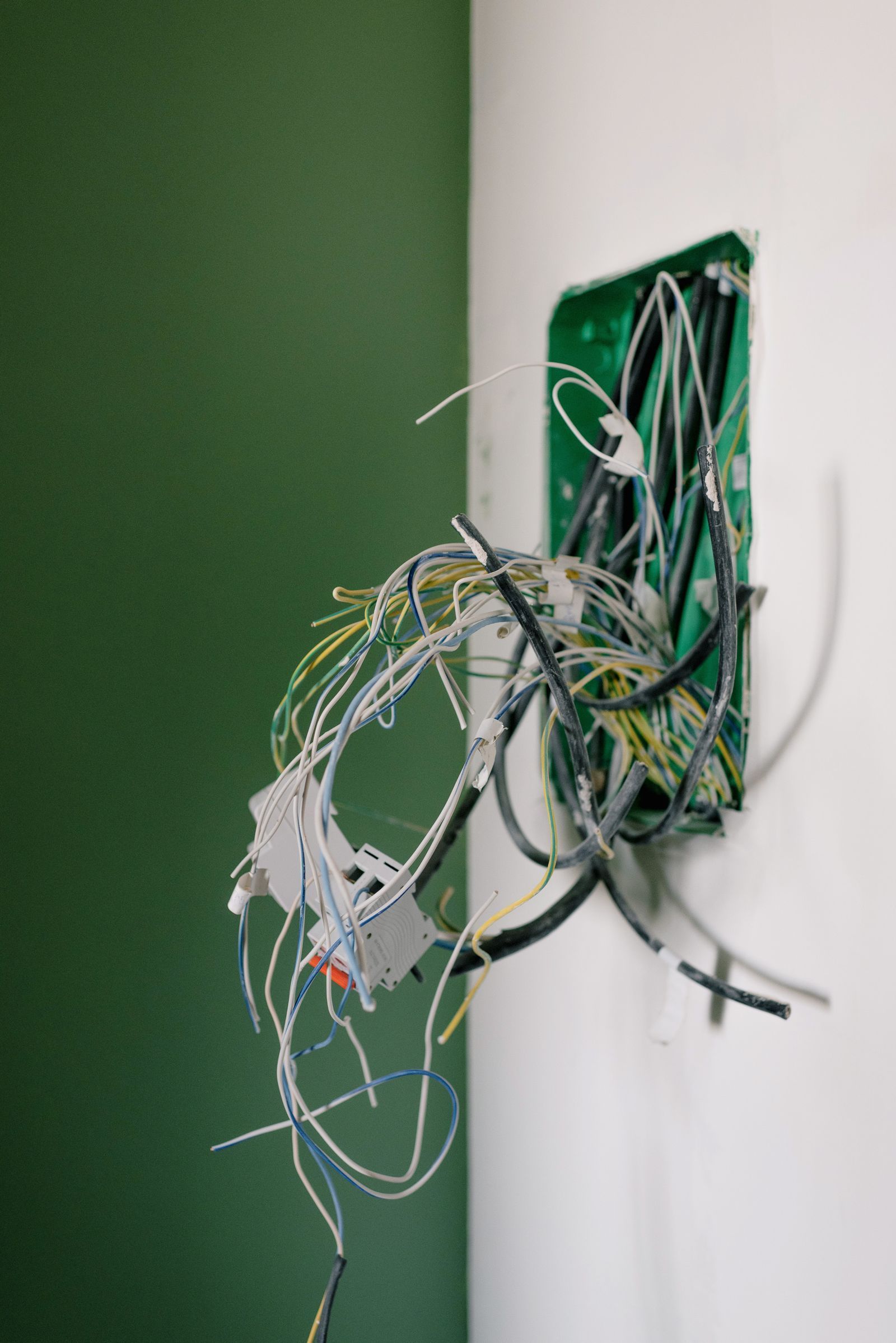
Illustrative stock photo: exposed wiring during construction, photographed by Ksenia Chernaya on Pexels, used under the Pexels License. The image is not an ExploreRPM property, a completed installation example, or an instruction to handle exposed wiring.
Contact ExploreRPM
Email: support@explorerpm.com
Phone: 512-865-4019
Blogs